Four decades of strengthening families
Developed in 1982 and replicated for more than 40 years in all 50 states and around the world.
Background
Recognizing the resiliency a strong, positive parent–child relationship and parental guidance provide to youth, the Strengthening Families Program was originally developed in the early 1980s as a family skills training program for families with children at risk because of substance-abusing parents. Found effective on the original NIDA grant in improving family relations, child behaviors and parenting skills and in reducing substance use, SFP has since been replicated with similar results for families seeking to strengthen their parenting and prepare their children to succeed.
SFP teaches parents about their role as model, guide and monitor as their children form their values and choose their path. It now includes four developmentally appropriate variants for families with children Birth–3, 3–5, 6–11 and 12–16. Communities and funders across the United States and around the globe have selected SFP to prevent and reduce risky behaviors facing youth and their parents, including substance abuse, criminal involvement, delinquency, barriers to academic performance and child maltreatment.
Program description
SFP is a 14-session, resiliency-based, in-person family skills training program. Unlike most parenting programs, parents and children attend together and practice new skills together before going home to use them. A typical weekly session opens with a half-hour family meal. Parents and children then meet for one hour in separate groups (or childcare), and rejoin for 30 minutes to practice together through fun, interactive activities. Each variant is matched to the child’s developmental age, not chronological age.
Parent Skills Training
Build positive time with children, manage stress, give clear directions, develop behavior change, hold family meetings and use effective discipline.
Children’s Social Skills Training
Bonding, communication, peer resistance, recognizing feelings, consequences of substance use and other risky behavior, anger management, problem solving and handling criticism.
Family Skills Training
Parents and children practice together: bonding, communication, family organization, family management and problem solving.
Proven effectiveness
In multiple replications, SFP reports significant positive outcomes:
Parents
- Increased positive parenting
- Increased parental supervision
- Increased parental involvement
- Decreased parental substance abuse or misuse
- Decreased parental depression
Children
- Increased social skills
- Reduced covert and overt aggression
- Reduced concentration problems
- Reduced hyperactivity
- Decreased depression
Families
- Increased family cohesion
- Reduced family conflict
- Increased organization and order
- Increased communication skills
- Increased strengths and resilience
Recognitions
Recognized by
- CrimeSolutionsNational Institute of Justice
- NREPPSAMHSA National Registry of Evidence-based Programs and Practices
- ACFAdministration for Children and Families
- UNODCUnited Nations Office on Drugs and Crime
- CEBCCalifornia Evidence-Based Clearinghouse for Child Welfare
- CSAPSAMHSA Center for Substance Abuse Prevention Model Program
- NIDANational Institute on Drug Abuse
- OJJDPOffice of Juvenile Justice and Delinquency Prevention
- U.S. Dept. of EducationU.S. Department of Education
SFP is recognized for the prevention of child maltreatment and of parental and youth substance abuse. Download the list of recognitions (PDF).
Sponsoring and implementing SFP
- Materials are distributed as a master set through a digital download for easy, sustainable and cost-effective implementation.
- Curriculum and implementation materials are designed for adaptation to the needs and culture of the host community and its families.
- Online, telephone and on-site technical assistance is available to assure quality and fidelity.
- SFP is implemented in schools, community centers, substance abuse treatment, hospitals, public housing, residential, criminal justice and faith-based sites.
- SFP has been implemented in all 50 states, Canada, Europe and Southeast Asia.
- Costs per cycle include compensation for four group leaders and a site coordinator, small in-session incentives, graduation, handout copies, the weekly family meal, and childcare and transportation.
- Start-up costs include SFP Certified Group Leader Training and purchase of the curriculum.
Karol L. Kumpfer, Ph.D., Program Developer

Karol L. Kumpfer, Ph.D. (Pawnee), is a psychologist and professor emerita at the University of Utah, and the developer of the Strengthening Families Program. She created SFP in 1982 as principal investigator of a study funded by the National Institute on Drug Abuse (NIDA).
Dr. Kumpfer earned her Ph.D. in psychology at the University of Utah and completed postdoctoral work in child development at the University of Minnesota. She served as Deputy Director of the Utah State Division of Alcoholism and Drugs, joined the University of Utah’s Department of Psychiatry, and later became Professor of Health Promotion and Education. From 1998 to 2000 she directed the Center for Substance Abuse Prevention (CSAP) at SAMHSA.
She was the first woman to serve as president of the Society for Prevention Research. Her honors include the U.S. Public Health Service’s Luther Terry Lecturer Award, a Distinguished Service Award from the Executive Office of the President, and the Society for Prevention Research’s Community, Culture and Prevention Science Award. Her research on SFP, including cultural adaptations, has been funded by NIDA, NIAAA and SAMHSA.
Jeanie Ahearn Greene, Ph.D., MSW, Executive Director
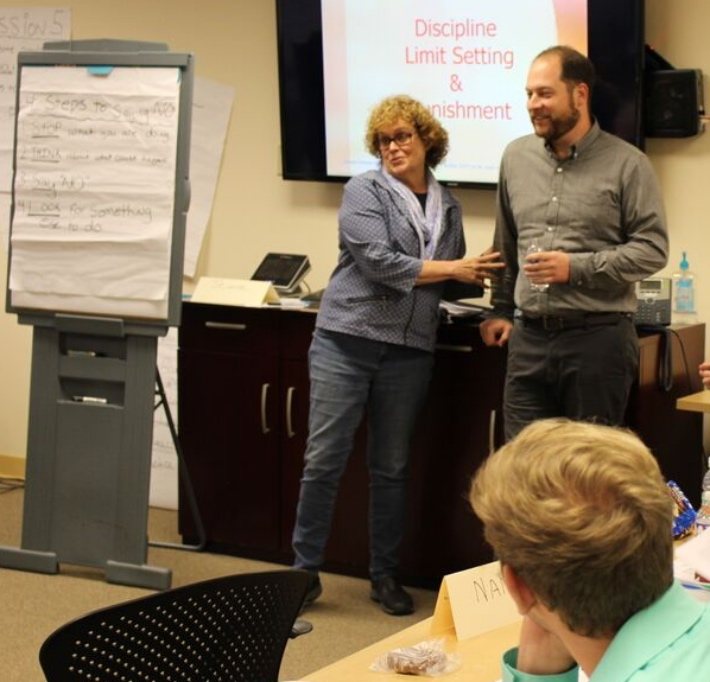
Jeanie Ahearn Greene, Ph.D., MSW, is founder and Executive Director of Ahearn Greene Associates, an independent health and human services consulting firm specializing in implementation support to assure the fidelity and effectiveness of evidence-based interventions. This includes implementation planning, staff training, community outreach, technical assistance, quality assurance and program evaluation.
Dr. Ahearn Greene is the purveyor of SFP (Birth–3, 3–5, 6–11, 12–16) in the United States, Canada and for all global implementation of SFP. Lutra Group, Inc., the parent company of the program developer, has authorized Ahearn Greene Associates as the sole source for SFP distribution, training, technical assistance and evaluation.
She has worked with SFP since 1997. She has conducted more than 750 SFP site visits and certified more than 2,000 SFP Group Leaders across the United States and Canada, and supports SFP projects in more than 142 international communities. She has implemented the program directly at community sites as a skills trainer and site coordinator, and developed the SFP outcome and fidelity evaluation methodology and instruments.
She earned her Ph.D. in Social Science from Syracuse University’s Maxwell School of Citizenship and Public Affairs (2000) and her Master of Social Work from Syracuse University (1992). She evaluates and provides technical assistance to more than fifteen health promotion and substance abuse prevention programs and multi-agency initiatives, with expertise in assuring fidelity, quality, program effectiveness and cultural congruence.
Ahearn Greene Associates, LLC
Ahearn Greene Associates is the sole source authorized by the SFP developer for SFP Group Leader Training, course materials, implementation support, quality assurance and evaluation. AGA is a team of health and human service professionals with combined expertise in evaluation, research, substance abuse treatment and prevention, mental health and multi-system intervention.
AGA projects have been funded by the U.S. Administration for Children and Families, SAMHSA, the National Institute on Drug Abuse, the Robert Wood Johnson Foundation, The Duke Endowment and many state and local agencies in the United States and Canada.
Ready to bring SFP to your community?
Tell us about your agency and the families you serve. We’ll reply within one or two business days with training options and a quote.